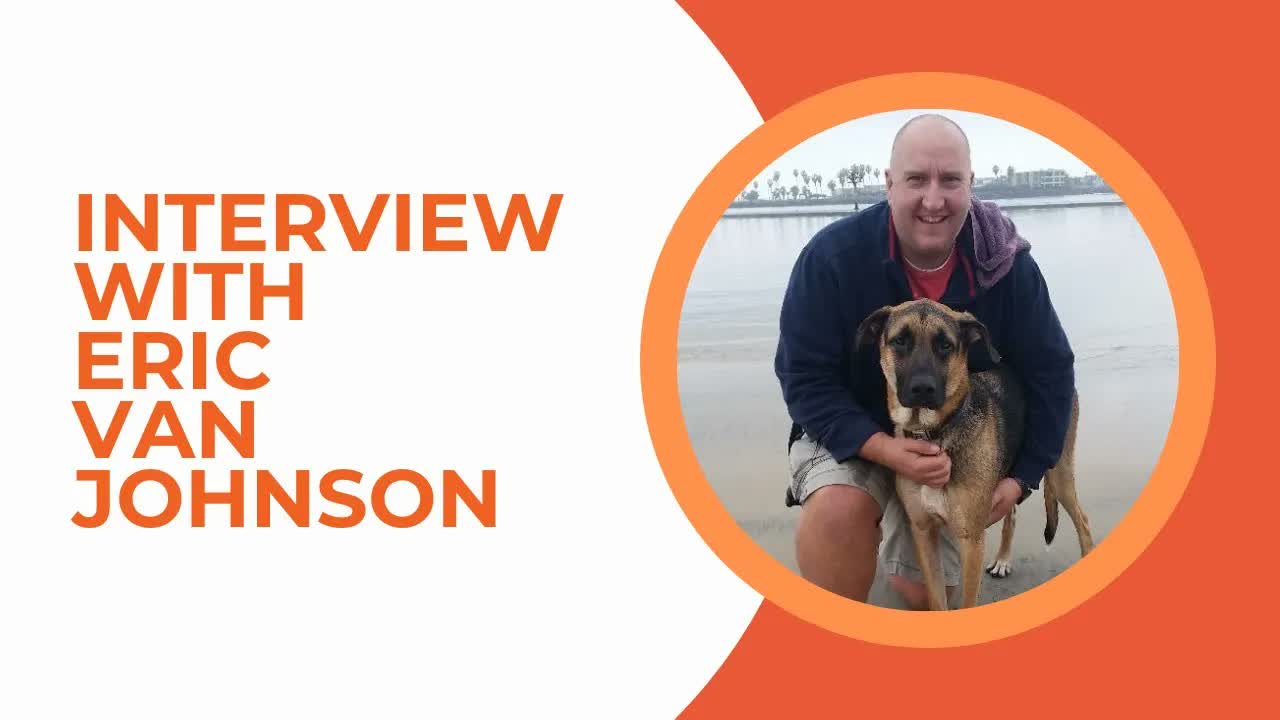
In this video, Scott talks with Eric Van Johnson of PHP[architect] LLC, about writing for the php[architect] magazine, the talk submissions process for php[tek], and why you should have a subscription to php[architect].
Links:
php[architect] - https://www.phparch.com/
php[architect] - "Write For php[architect]" - https://www.phparch.com/editorial/write-for-us/
Notion - https://www.notion.so/
00:00 Intro
00:18 Eric Van Johnson
00:59 Writing for php[architect]
05:52 PhpStorm
06:40 php[tek]
12:47 php[architect]
15:52 Outro
php[architect] is an industry-leading publication focused on the PHP language. We are for developers, written by developers. Publishing great PHP content since 2002 and dedicated to providing educational material to the PHP programming community.
Transcript
 Scott Keck-Warren
0:05
Scott Keck-Warren
0:05
Hello developers and welcome to episode 1 of the PHP Architect Community Corner where we have conversations with members of the PHP community and the technology community at large. I'm your host Scott Keck Warren and today we're talking with Eric Van Johnson about submitting articles to the PHP Architect magazine, the selection process for talks at PHP Tech 2024, and and the benefits of having a subscription to the PHP Architect magazine. Eric Van Johnson is one of the minds behind PHP Architect LLC. Described as loud and passionate about the PHP programming language, he has been known to record a podcast or 2, or maybe even 3. Powered by scotch and hope, you can follow Eric on Twitter @ssocom and at Mastodon at eric@phparch.social. Thank you, Eric, for finding time to talk with us today.
 Eric Van Johnson
0:51
Eric Van Johnson
0:51
Scott, thanks for taking the time to talk to me. I appreciate it.
Scott Keck-Warren
0:54
Absolutely. I know that the PHP Architect magazine is a magazine made by the community for the community, and you're constantly looking for contributors to help write articles. If I had an idea for an article, what would the process be?
Eric Van Johnson
1:06
Right, great question. I appreciate you asking. It's really meant to be as less— as least stressful as we can make it. Essentially, there's just so much good information out there that we as developers hold on to. And we want to make sure everybody has an outlet, outlet to share that because there's just— it's just, it's just nonstop. Our, you know, our industry is always changing. There's always new things emerging, how we do things. There's no one right way to do things. So everybody has, you know, a thought or an understanding or knowledge of something. So if you're interested in contributing to PHP Architect, the magazine, you just simply reach out to us and it can be as casual as, hey, I have an idea for an article, is this something you would be interested in? Pretty straightforward with you, we'll give you a yes or no. Typically, if it's— obviously, ideally we like things focused on PHP, that's kind of our, always our free pass. But even if it's PHP adjacent, where it's like web technology or web development or something like that, even then we're— we'll, we'll give it a listen and kind of talk through it. You don't even have to write it. After that, all we ask is for the article to be ideally between 2,500 and 3,500 words. That seems like a lot, but really once you start writing, it flies by. It's very common that people contribute well over 3,500, and that's okay as well. Don't ever think you need to hit that 3,500. That 3,500 is not the high bar, like you have to hit it and then everything gets cut off. It's more like that's the sweet spot for us to get it in one release of a magazine. We've had articles, 5,000 words, 6,000 words, and all we end up doing is breaking those out across a couple of releases. Once we agree on a topic and you understand what we ask as far as a deliverable, you then tell us when you think you can, you can have it done. Now, this is not a hard deadline you're setting on yourself. It's just for us on our end, we add those articles to our pipeline and we can see, oh, Scott says in December he's going to have a feature article for us. Haven't heard from Scott, so we'll assume he's still targeting that December, December release. If you do end up having to postpone it and you need more time, you just let us know and say, hey, I'm gonna need another month, I'm gonna need another 2 months. It's really just so we understand if we need to find another feature article for that month. That's all there is, no pressure at all. And then that's it. Get your name out there, get feedback, and we work with you all the way through the process. We appreciate that you submit the article in Markdown. That just works best for our pipeline. Even better, if you, if you're familiar with the service Notion, notion.so, that is actually what we use to manage a lot of the magazine, including the article pipeline. So if you happen to use Notion or you're comfortable using Notion, you can do your article right there in Notion, share it with us, and we pull it right into our pipeline. The cool thing about that Is, as our proofreaders and our editors are reading through your article, if they have questions, they can comment right there in Notion, and you should get a notification that there's a question about something in the article. But we do a pretty thorough Grammarly check, so we, you know, check for spelling and grammar, make sure that It's kind of all looking good. And then we have proofreaders kind of go through and just kind of look at the integrity of the information. And the goal there is to make you, the person contributing, look as good as possible, like you know what you're talking about.
Scott Keck-Warren
5:34
I've actually contributed a couple of articles in the past, and it really is an easy process. I like to talk about technology anyways, so it's easy for me to hit that word limit without, without a problem. It's actually shocking how easy it is to just blow right past it and then have to start cutting back stuff out of it. Now's a perfect time for a break, so we'll be right back after this word from our sponsors. PhpStorm is a cutting-edge IDE tailored specifically for PHP and web developers. If you haven't used it before, or it's been a while since you last tried it, now's the perfect time to check it out. PhpStorm has recently received significant performance enhancements and has an ever-expanding feature set. Now, I'm a recent convert to PhpStorm and I love it. One of my favorite features is the ability to rename a class and have PhpStorm find all the references and just automatically fix them for us. Curious to see if it's the right fit for you? Head to jetbrains.com/phpstorm to learn more and try it out with a free 30-day trial. Code smarter, not harder. And we're back with Eric Van Johnson from PHP Architect LLC. I wanted to talk to you about PHP Tech 2024. I know that you all have announced that PHP Tech 2024 is going to happen April 23rd through 25th in 2024, obviously. Right now you're in the call for papers phase. How much longer is that going on and what are the details that people need to know about that?
Eric Van Johnson
6:55
So John, my business partner, always gets mad at me because I always get this wrong. I always think it should be until the end of October, but it's actually until the end of November. Call for papers. Open. And again, great way to kind of share knowledge if you've ever been interested in talking at a conference. It's a great thing to have on your resume, by the way— conference speaker. People put it on their resumes all the time. But yeah, you just go to tech.phparch.com/speakers, and there's a link in there that will take you to the system that allows you to contribute papers. You don't, again, much like the article, you don't have to have the whole thing fleshed out. You can just have an idea of a topic. We have much like this year, so 2023, we were able to bring PHP Tech back as an in-person conference. We're really excited about that. It was our first time organizing PHP Tech. And went pretty well. But we have a little bit of a different format. We have every day. So there's your there's your typical hour-long talks, which is kind of like the kind of what a lot of people are accustomed to at. But every day we also have the slot before lunch. We have a half hour, and we found that a lot of times people have talks that they really can't stretch. to a full hour. So they, they aren't interested in submitting. But we do have a half-hour talk. We have 3 tracks, so that's 9 talks that are half-hour long. And then on the first day, instead of holding a whole— a completely separate day where we have maybe like 2 tutorial sessions, The first day, the second half of the day are 3-hour-long tracks. So if you're somebody who likes doing like a classroom sort of learning experience and sharing, you know, a big interactive sort of talk, that might be the solution for you.
Scott Keck-Warren
9:11
The half-hour-long tracks were really nice last year because they seemed to hit just like as I was getting ready for a break, and it allowed for talks that weren't as tiring. I didn't want to commit myself to an hour's worth of stuff when my blood sugar was hitting its lowest point. Is there something specific you all are looking for as you go through the talk submissions, or is it just kind of like whatever feels best right now?
Eric Van Johnson
9:32
So I come to it from the angle of, is this a topic I'd want to hear about? This year, One of the— some of the feedback we, we got from last year— or from this year, I'm sorry, years all mixed up— some of the feedback we got from this year's conference was that there weren't enough advanced talks. We are kind of trying to keep an extra eye out for more advanced talks, and you can rate— you can rank what you think your talk is from, you know, easy to advanced. We don't want to bury the conference with advanced talks because then we'd hear the other thing, you know, the people coming and saying, oh, this was way over my head, I wasn't able to get anything. So we are looking for more advanced talks. Again, obviously PHP-specific topics bubble up pretty quick, but we do soft talks as well. And again, adjacent web technology sort of talks. JavaScript, uh, we had a, we had a few JavaScript talks last— this year. Um, so yeah, I mean, anything much like the article, anything that you find interesting that you think others would find interesting, submit it. And you can submit multiple talks. Matter of fact, if you submit multiple talks in multiple your— of your talks, more than one gets selected, it's a much higher probability that you will make the final round. Because if we can get a speaker to give multiple talks, it helps us with planning and coordination because we have less speakers to have to manage. So, and so everybody understands the process a little bit. Again, not a fleshed-out talk, just kind of a summary of a topic I— a topic you want to write a presentation if you don't already have one. Our first round is internal to the team at PHP Architect. There's about 8 of us, actually, but I guess about 10 once you consider everybody. That first round is a complete blind review. We don't see the contributor's name. All we do is Everybody gets the topic, and if that topic is something that then the second round, you know, we we see of everybody who got selected. Are there any speakers who have multiple talks? And those are kind of the ones we look at first and like, okay, do we like do we like all these talks, or do we like you know multiple of these talks from this one speaker? And Then we usually, after that round, well, sometimes we'll bounce that round to the team internally as well. And then that's typically it. We try to whittle it down to the people we're selecting.
Scott Keck-Warren
12:39
It sounds simple, right? At least in the face of it.
Eric Van Johnson
12:42
Yeah, it is. It really is. I promise.
Scott Keck-Warren
12:45
Is there anything else you'd like to talk about before I let you go today?
Eric Van Johnson
12:49
I mean, if you're not a subscriber to PHP Architect, you should be. do so. Ideally, get your work to pay for it. It's— we consider it, we consider it continual education, and that is indeed what it is. So, you know, subscribe every month, digital. We do have a print version as well. It's nice. The print version is nice. I have a couple behind me here. I should have had it here, but it's really high quality. I like to throw them in my, in my car or in my backpack and just have with me. But yeah, there's always a digital version. And yeah, subscribe and subscribe to our YouTube channel. Scott's been putting out some great videos. If you haven't been following, he's been putting out some great videos. So make sure you subscribe. And I guess you're supposed to hit the notification button. That seems to be a thing the kids say these days.
Scott Keck-Warren
13:40
I get the digital version and I really like it because I can just send it right to my Kindle and then it's on my Kindle that night when I'm ready to read. The magazine also itself is a really great way to stay up to date on what's going on in the community.
Eric Van Johnson
13:51
I've been doing development for years. I mean, it's crazy how often I pick up a magazine and learn something new or something that interests me. It's just, there's just so much information out there. It's nice. And what's really cool, kind of the same thing about attending a conference, uh, with the magazine, I'll, I'll go through the magazine and even if I don't read the full article, I typically pay attention to what they're talking about. Same thing with going to a conference. Even though it might not be something I'm interested in or working with, I'll go to a talk because I'm just curious about it. I can't tell you how many times, like days later or weeks later or years later, something will happen and it's like, oh yeah, we need to do some event sourcing, and like a light will go off my head. I'm like, oh yeah, I remember reading about that in PHP Architect, and I'll go back through my by architects and try to find it. One thing that a lot of people don't realize about PHP Architect, if you subscribe to the, to the digital version, you get access to our complete back catalog. So you literally get all the releases from the beginning of PHP Architect, and we're talking since 2002. So that's a lot of magazines you get when you sign up for PHP Architect.
Scott Keck-Warren
15:14
Yeah, it's like over 20 years worth, which is a lot. The other thing I like about it is there's little bits and pieces of information in there that I might not normally come across through my normal web browsing process. And sometimes somebody will throw out like a word that I don't know inside of an article, and that allows me to kind of like search it out further and get more information. And it might not help me now, but it might help me in the future. So it's really like a helpful part of the community.
Eric Van Johnson
15:37
Yeah, I'm glad you get something out of it. That's always great to hear. I really don't get that. I don't hear that enough. I mean, not that people don't feel that way. They just don't think to Say, hey, appreciate the magazine. Got some good stuff out of it.
Scott Keck-Warren
15:50
Yeah, absolutely. Thank you, Eric, for finding some time with us today and sharing your wisdom with our audience.
Eric Van Johnson
15:55
Thanks for having me, Scott. I had a great time.
Scott Keck-Warren
15:57
I have to say another heartfelt thank you to Eric for all of his time today, and thank you for listening to our podcast. If you're not already a subscriber, make sure you subscribe so you get our episodes when they're released. Maybe you share this with a coworker so they could learn from it as well. This podcast is available in both audio and text versions on the PHP Architect website. and a video version on our YouTube channel. This is Scott Keck Warren for the PHP Architect Community Corner, signing off and reminding you to keep listening, keep coding, and keep reading.